Waste Oil ¡¤ Emulsion Fuel

Waste oil emulsion fuel —
turning waste oil into cleaner fuel

We refine waste oil, adjust its water content and micro-emulsify it, supplied in two ways: pre-emulsified fuel or in-line emulsion combustion.

93.1%Less dust (national institute test)
10%+Energy savings (generator and boiler tests)
15 / 20%Water ratio (pre-emulsified / in-line)
01 CHALLENGE

Challenges for waste-oil fuel users

Inconsistent quality

Composition, water and impurities differ by source, so combustion is uneven.

Soot and dust limits

Waste-oil fuels produce much soot and dust, making emission limits hard to meet.

Fuel costs

For fuel-hungry boilers and furnaces, a few percent of efficiency means a big cost difference.


The solution: refine ¡æ control water content ¡æ micro-emulsify. Mixing purified waste oil with a set ratio of water into droplets under 10 ¥ìm causes ¡°micro-explosions¡± in the combustion chamber that shatter the oil, so it burns cleaner and more completely.
02 PRINCIPLE

How emulsion fuel burns

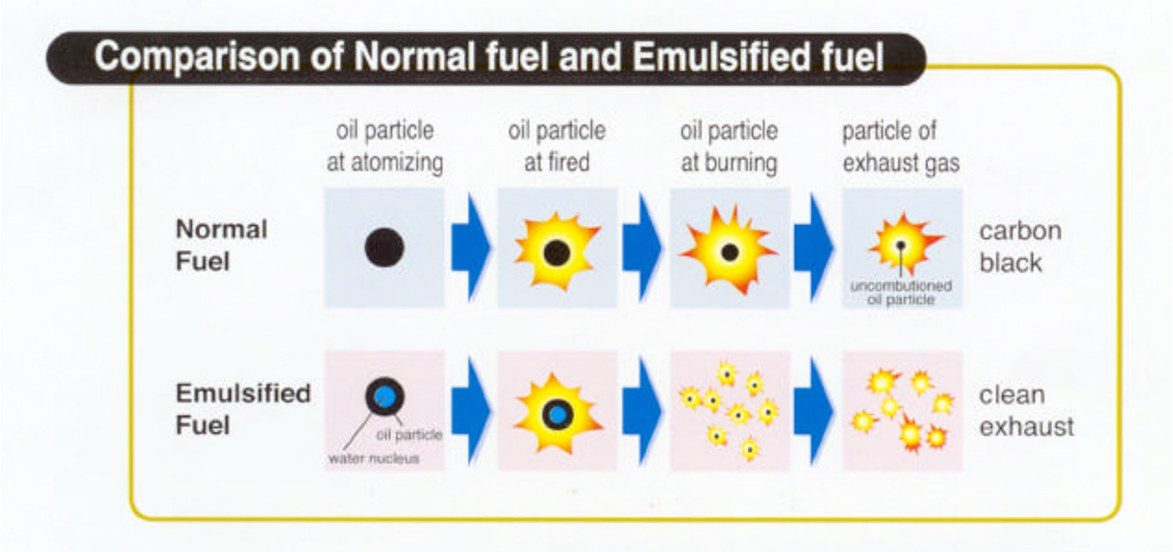
Water-in-oil emulsionAn oil film surrounds water droplets of 10 ¥ìm or less (W/O).
Micro-explosionAt high temperature the water flashes to steam and expands about 1,700 times, bursting the oil droplets apart.
Complete combustionSmaller oil droplets have more contact with air, so even low-grade fuel burns cleanly.
Lower emissionsSoot, dust and CO fall, and lower peak flame temperatures suppress thermal NOx.

Note: water produces no heat, so heating value per liter falls as water is added. The savings come from more complete combustion; too much water makes the flame unstable. That is why water-content control is essential.

03 CORE TECHNOLOGY

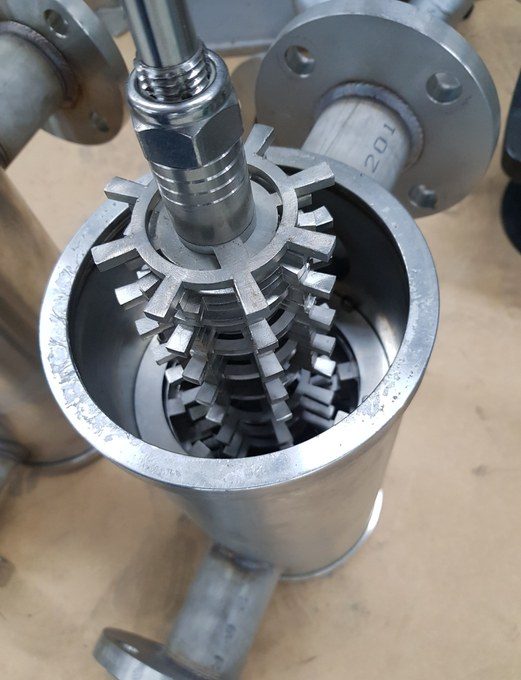
Core technology: the pressurized multistage jet mixer

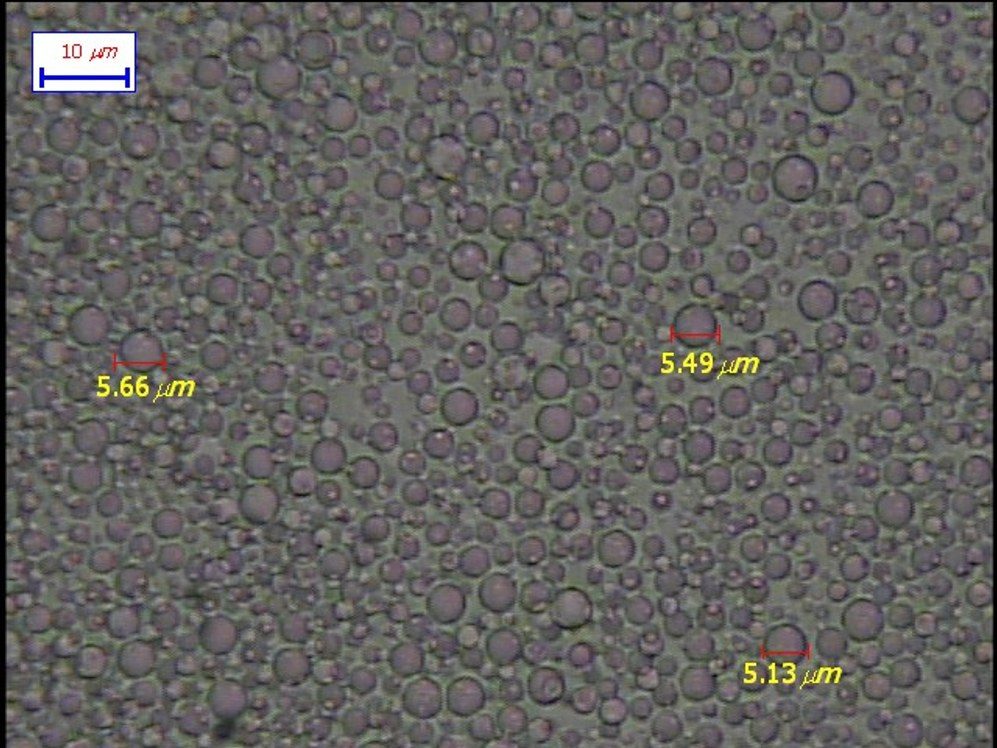
Target: uniform dispersion of water droplets under 10 ¥ìm. Micrographs of the mixture show droplets of about 5 ¥ìm.

Minimal emulsifier

Mixes water and oil by mechanical micronization rather than relying on surfactants.

No compressor or pressure tank

A compact multistage design that solves clogging and scale-up problems.

Handles viscous, dirty feed

Micronizes viscous waste oil with residual fine particles without clogging.

Size and ratio control

Droplet size and water ratio are controlled by feed rate and rotation speed.

04 PROCESS

The full process: from refining to combustion

CollectionCollected and transported by licensed operators
RefiningRemove sludge, carbon and metals
Measure waterCheck current water %
Set water additionCompare with target and calculate
Micro-emulsifyPressurized multistage jet mixer

Method A

Pre-emulsified fuel

Emulsified in advance, stored and shipped; users feed it to existing burners as is. Water 10–15% (legal limit 15% in Korea)

Method B

In-line emulsion combustion

Water is proportionally mixed in the pipe just before the burner. Water up to 20% (confirmed by combustion tests)

05 MOISTURE CHECK

Measuring water content and setting the water addition

Water to add = fuel volume ¡¿ (target − current) ¡À (100 − target). If current water content exceeds the target, no water is added and the oil is dewatered first.

Current waterTarget 15% (pre-emulsified)Target 20% (in-line)
2%153 L225 L
3%141 L213 L
8%82 L150 L
18%Dewatering required (Korean standard)25 L

Per 1,000 L of fuel. Measurement: distillation or Karl Fischer titration (lab, per batch) or an online moisture meter (real-time in the pipe, suited to in-line). Refined feedstock must meet the refined fuel oil standard (water and sediment 2% or less).

06 METHODS

Two supply methods compared

Method A

Pre-emulsified fuel

  • Refined oil ¡æ metered water (10–15%) ¡æ mixer ¡æ storage tank ¡æ stability check ¡æ shipping
  • Produced and sold as a consistent product (emulsified refined fuel oil)
  • Users need no extra equipment
  • Korean standard: water 15% or less, uniform for at least 30 days
  • Circulation mixing to prevent separation; test records kept for each batch
Method B

In-line emulsion combustion

  • Refined oil tank ¡æ fuel pump ¡æ flow and moisture meters ¡æ oil-water mixer ¡æ burner
  • Burned right after mixing, so no separation and no emulsifier
  • A proportional-control CPU adjusts water to fuel flow and current moisture
  • Reverts instantly to normal fuel if a fault occurs
  • Upper water limit (up to 20%) set by combustion tests for each burner

ItemA. Pre-emulsified fuelB. In-line emulsion combustion
Water ratio10–15% (legal limit 15%)Up to 20% (set by combustion test)
LocationWaste-oil refining and recycling plantsFuel users (boilers, furnaces, etc.)
ProductStored and sold as emulsified refined fuel oilNo product sold; burned on site
StabilityUniform for 30+ days; circulation mixing neededBurned immediately — no separation
Main customersWaste-oil refiners and recyclersIndustries burning refined fuel oil
AdvantageNo equipment change for usersAutomatic load-following, higher water ratio

Check applicable standards with the local authority before operating above 15% water.

07 TEST RESULTS

Test results

Tests by the National Institute of Environmental Research (Korea) — standard heavy oil vs. emulsified heavy oil. Approved as a combustion aid by the Environment Agency (Reg. 92-48); generator (300 kW) and boiler (3 t/h steam) tests confirmed energy savings of more than 10%.

Test itemHeavy oilEmulsified heavy oilReduction
Dust (mg/Sm©ø)18913.193.1%
CO (ppm)8275.0%
Smoke (degree)2150.0%

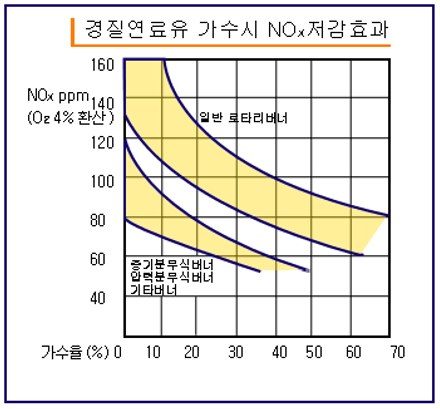
Light oil: more water ¡æ lower NOx
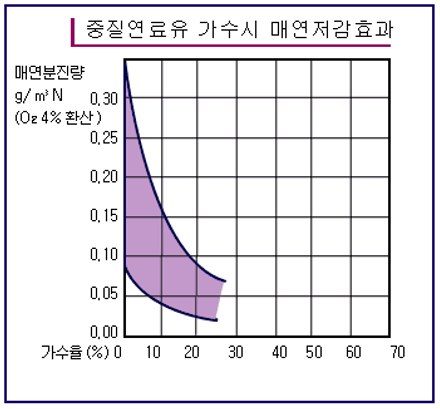
Heavy oil: more water ¡æ less smoke

Earlier tests used heavy oil. The same items will be retested with waste-oil emulsion fuel for case data.

08 ECONOMICS

Annual fuel savings

For one boiler using 100 L/h (10 h/day ¡¿ 300 days = 300,000 L/year), savings of 5–10% mean 15,000–30,000 L of fuel saved each year.

5% savings
15,000 L
7% savings
21,000 L
10% savings
30,000 L

Savings = volume saved ¡¿ fuel unit price. Our tests showed 10% or more; we conservatively start at 5%. Quotes use the customer¡¯s actual fuel price and consumption. Savings on pollution-control operation from lower dust and smoke are additional.

09 MARKET

Market: who makes and uses waste-oil fuel (Korea)

~160,000 tRefined fuel oil produced per year (2013)
~240 million LWaste lubricating oil generated per year (2013)
597Waste-oil recyclers (2012)

Method A

Waste-oil refiners and recyclers

Licensed refined-fuel producers can add emulsified refined fuel oil as a product.

Method B

Industrial users of refined fuel oil

Industrial boilers, melting furnaces and kilns using refined fuel oil instead of bunker C.

Method B

Cement kilns

Cement plants using recycled or refined oil as auxiliary fuel.

Method B

Incinerators

Incineration facilities using liquid waste and waste oil as auxiliary fuel.

Source: ¡°Analysis of waste oil status and measures to promote recycling,¡± Environmental Policy Research 14(2). Latest statistics should be checked separately.

10 REGULATION

Korean standard: emulsified refined fuel oil

Refined fuel oil quality standard (Enforcement Rules of the Wastes Control Act, Annex 5-3). Oil is refined by chemical treatment, vacuum distillation or pyrolysis, or emulsified after removing heavy metals, ash and sludge.

ItemStandard
Water and sediment2.0% or less
Sulfur0.55% or less
Ash1.0% or less
Cadmium / lead1 / 30 mg/L or less
Chromium / arsenic5 / 2 mg/L or less
Flash point40 ¡ÆC or higher

Water 15% or less

Water in emulsified refined fuel oil is 15% by volume or less

Uniform for 30+ days

A stable, uniform emulsion maintained for at least 30 days

In-line operation at 20%

The 15% limit applies to stored and sold products. With in-line mixing just before combustion, more water may be added depending on conditions.

Stricter standards apply to pyrolysis and vacuum-distillation refining. Check the original regulations and the competent authority for details.