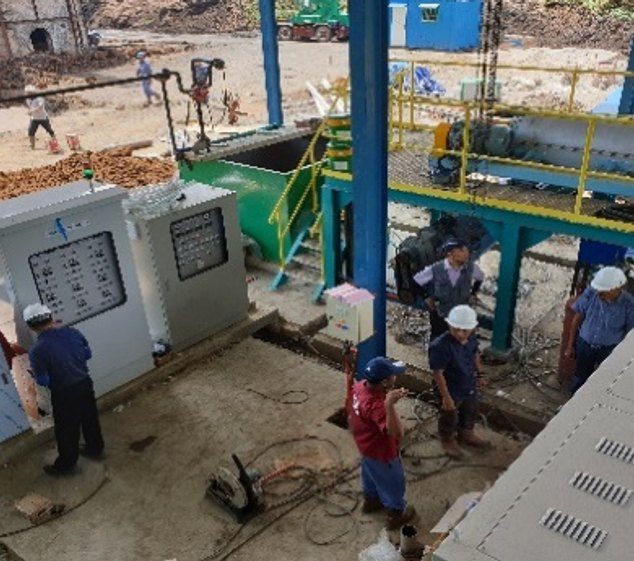
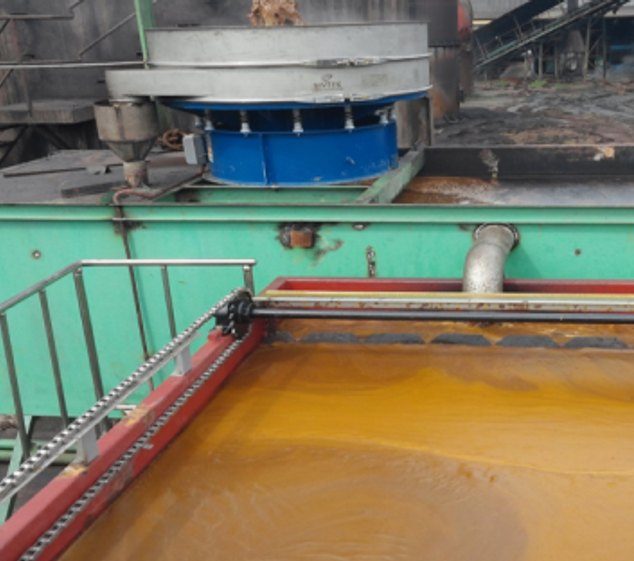
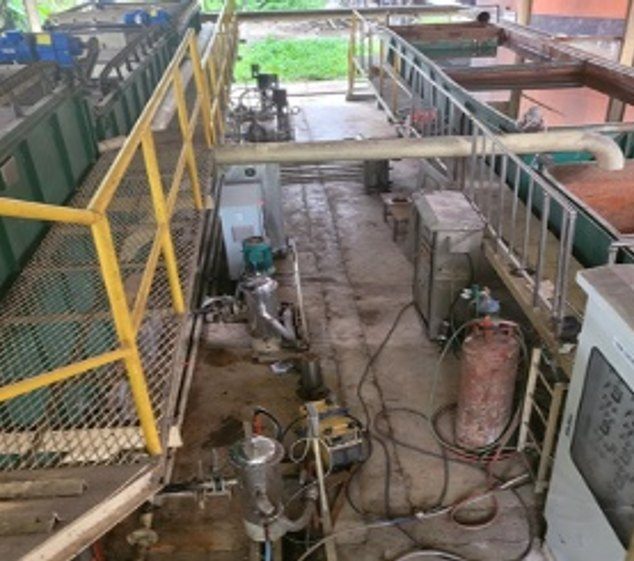
A system that recovers oil from palm and olive oil mill effluent and treats the wastewater with nano-micro bubbles.

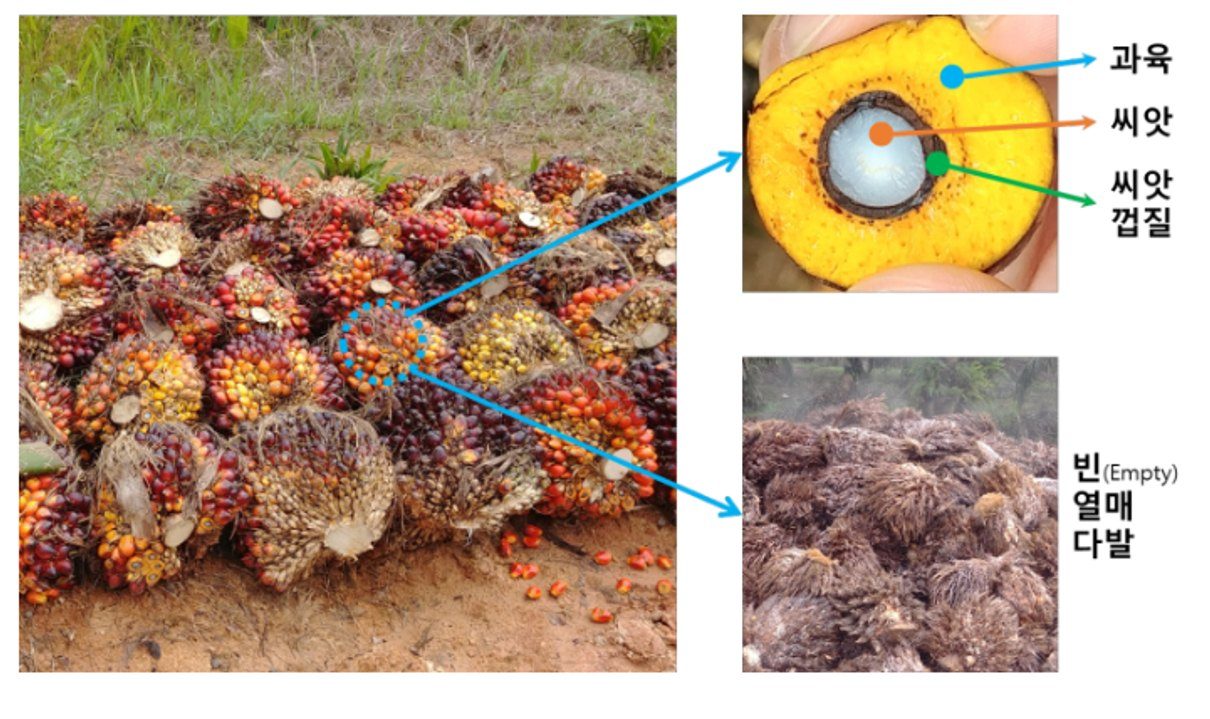
Palm oil comes from the fruit of the oil palm (Elaeis guineensis): crude palm oil (CPO) is pressed from the flesh and palm kernel oil (PKO) from the kernel. It is used widely in processed foods and household products, and its role as a biodiesel feedstock is growing fast.

Source: Indonesian Palm Oil Association (GAPKI)
Palm oil mill effluent (POME) is a concentrated suspension of water, oil and sludge. It is harder to filter and dewater than ordinary wastewater and causes equipment failures and overflows. As production grows, Indonesia and Malaysia are tightening discharge standards.
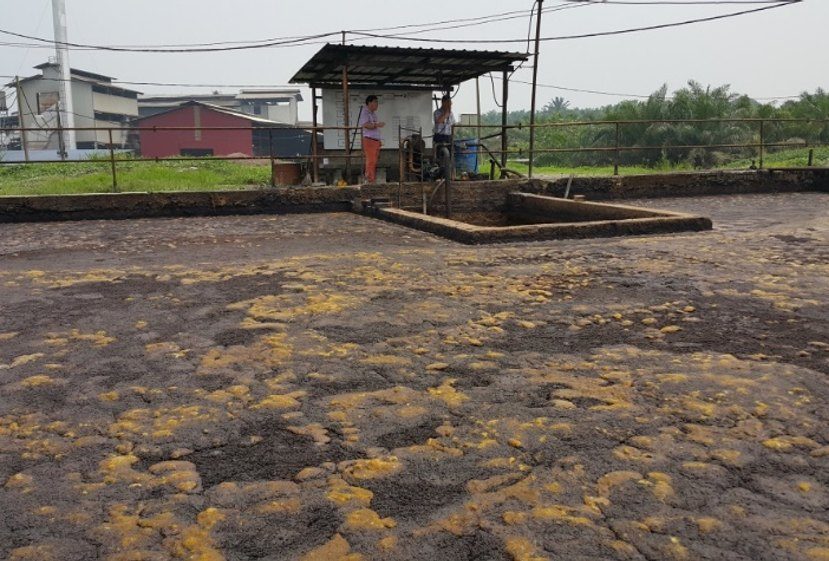
Most mills rely on a primitive approach: circulating and storing effluent in a series of ponds for natural treatment.
Oily effluent sits in the ponds as it is.
Many ponds and a lot of land are needed.
Sludge build-up and methane emissions.
The palm oil in the effluent is never recovered.


Our system recovers 70–80% of the oil (1.0–2.0%) in effluent from mills in Indonesia, Malaysia and elsewhere, generating revenue, and separates sludge (3–4%) to treat 90% of the wastewater. It sharply cuts CO©ü emissions and also works for olive oil effluent.
Recovers the 1–2% oil in effluent — over 4 tonnes per day at 400 t/day of effluent.
Greatly reduces organic load; secondary OHR treatment enables water reuse.
Reduces methane from wastewater ponds, helping to curb global warming.
Based on 30 t/h effluent, 1% oil recovered, 15 h/day and 300 days/year.
Oil content in effluent 0.8–1.5%; oil recovery rate 75–90%. Palm oil price USD 1,000/t.
| Item | Before | After | Effect |
|---|---|---|---|
| Influent BOD to treatment (ppm) | 50,000 | 5,000 | 90% lower |
| Number of ponds | 12 | 4–5 | 66% fewer |
| Sludge cleaning | Once every 2 years | Once every 10 years | 8 years longer interval |
| Final effluent BOD (ppm) | 80–100 | 20 or less | Meets environmental standard |
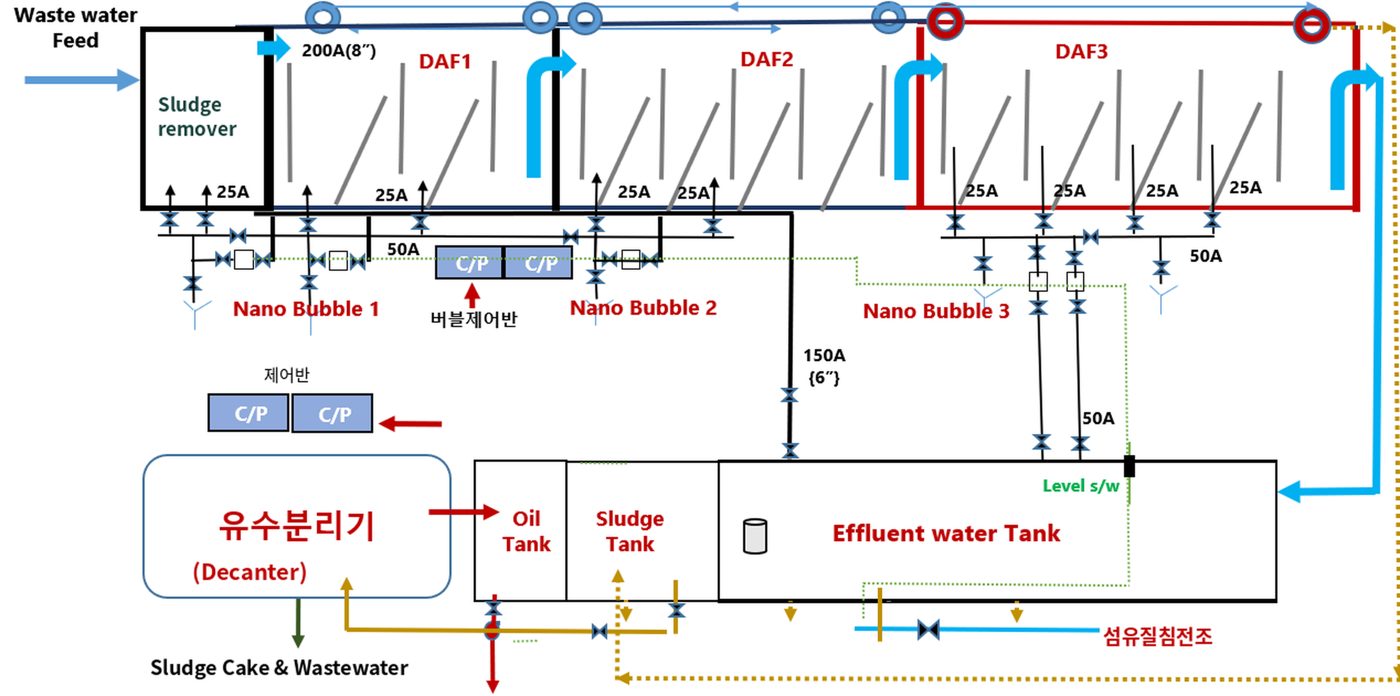
After three-stage DAF (dissolved air flotation), oil in the effluent fell 87%, from 1.41% to 0.19%.
| Sampling point | Oil (%) | Water (%) | Losses to FFB (%) |
|---|---|---|---|
| Inlet | 1.41 | 95.29 | 0.71 |
| DAF Step 1 | 0.60 | 97.63 | 0.30 |
| DAF Step 2 | 0.39 | 97.23 | 0.20 |
| DAF Step 3 | 0.19 | 97.23 | 0.13 |
| Outlet | 0.19 | 97.61 | 0.13 |
| Item (mg/L) | Influent | PORS-1 | PORS-2 | OHR SYSTEM |
|---|---|---|---|---|
| COD run 1 | 136,620 | 58,291 (57.3%) | 14,168 (89.6%) | 4,534 (96.7%) |
| COD run 2 | 180,136 | 43,718 (75.7%) | 9,310 (94.8%) | 1,133 (99.4%) |
| TS run 1 | 147,922 | 45,896 (69.0%) | 13,514 (90.9%) | 4,584 (96.9%) |
| TS run 2 | 156,744 | 33,470 (78.6%) | 8,823 (94.0%) | 884 (99.4%) |
| SS run 1 | 68,856 | 22,946 (66.7%) | 26,377 (61.7%) | 439 (99.4%) |
| SS run 2 | 48,190 | 14,999 (68.9%) | 1,566 (96.8%) | 160 (99.7%) |
Figures in brackets are removal rates vs. influent. OHR: secondary treatment after oil recovery. COD: chemical oxygen demand; TS: total solids; SS: suspended solids.
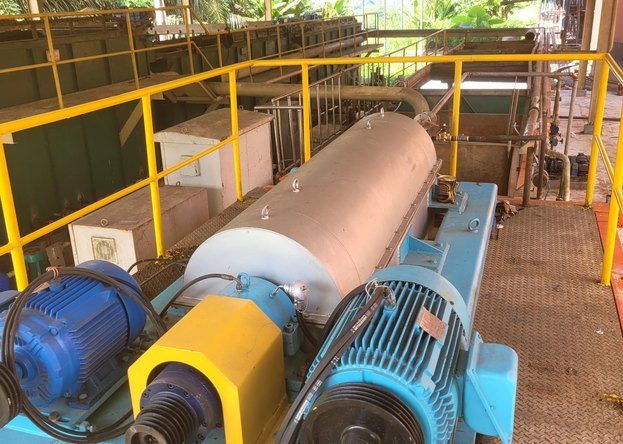
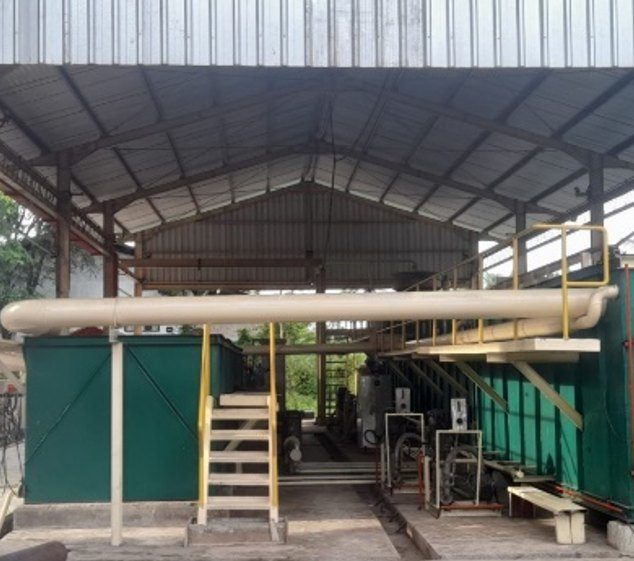
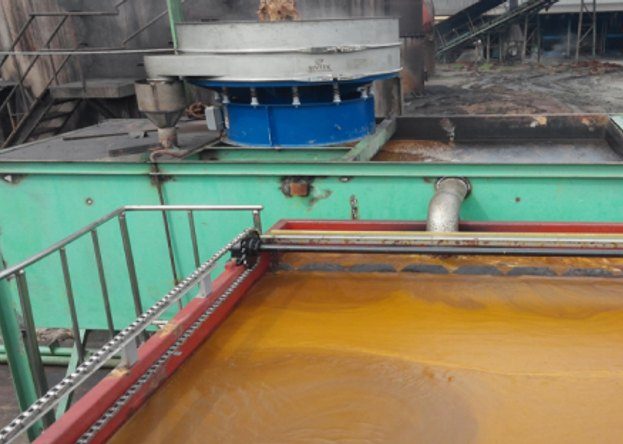
Separates sludge and water from floated palm oil to recover pure oil
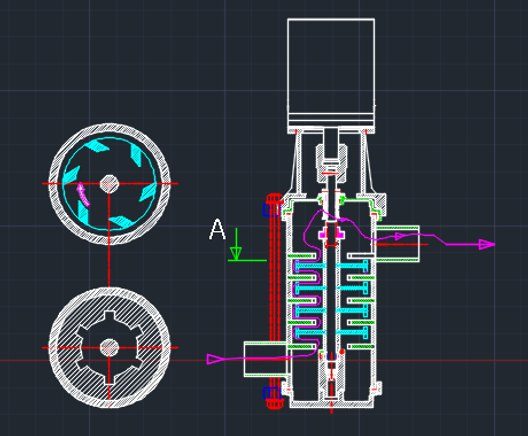
Pressurized multistage mixer bubble technology
Steam heat-exchange piping optimized in spacing, size and position to hold 80 ¡ÆC or more automatically
Fibers are settled or separated and removed
Lower water content and oxidation of separator oil
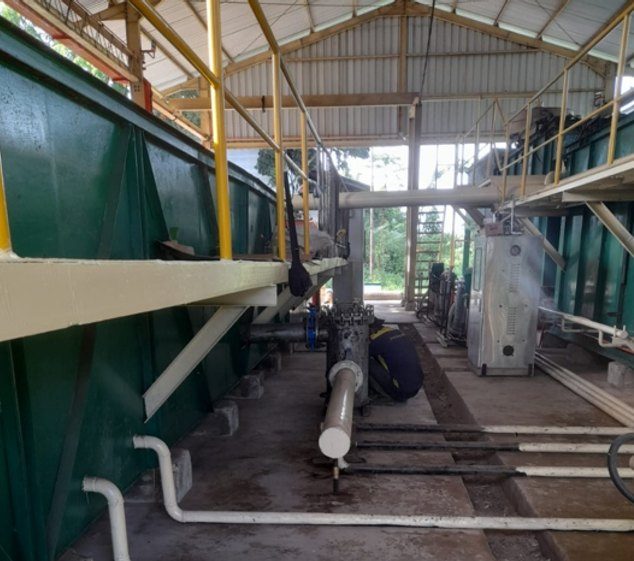
Metering pumps adjust transfer automatically; gauges and sensors let the separator run on its own


There are about 2,000 mills — some 1,200 in Indonesia, 550 in Malaysia and 250 elsewhere — and the global market for recovery equipment is estimated at about USD 2.9 billion (at USD 1M per system).