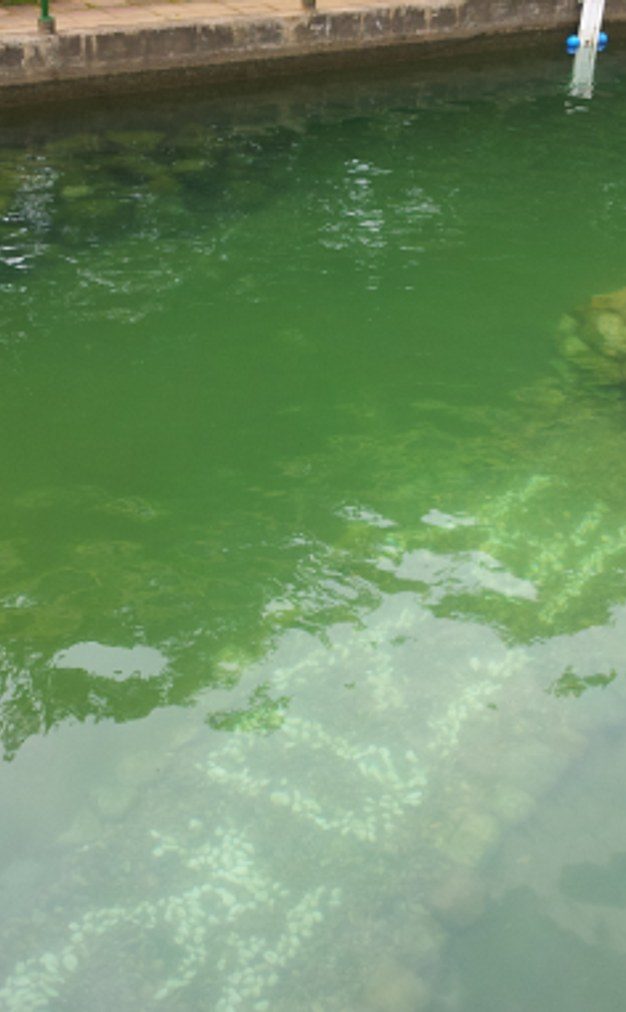
Hydrogen peroxide + oxygen nanobubbles + soil microbes: a combined treatment that cuts algal blooms fast and prevents recurrence.

Phosphorus and nitrogen from sewage, fertilizer and leaves feed cyanobacteria.
When the bottom lacks oxygen, phosphorus stored in sediment dissolves back into the water and feeds the bloom.
Cyanobacteria multiply explosively in warm summer water that does not flow.
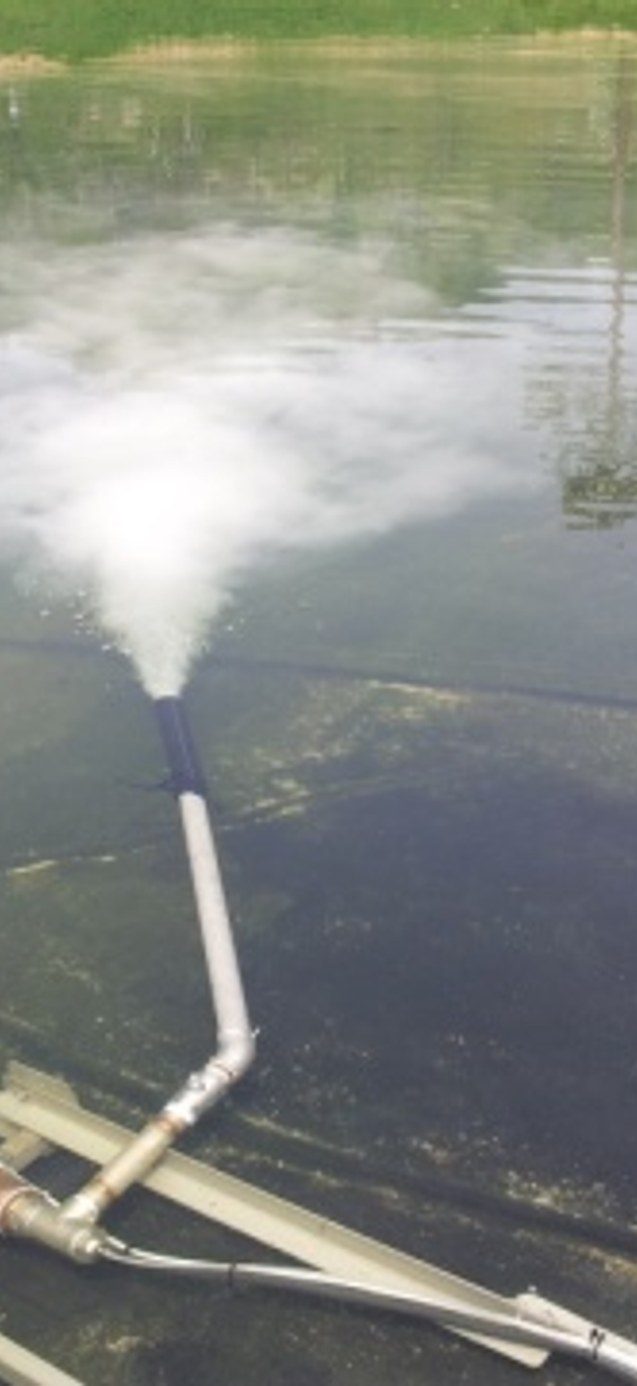
All three run through a single pressurized multistage nanobubble unit — oxygen and microbes in normal times, hydrogen peroxide only at the start of a bloom.
Dosed at low concentration early in a bloom, it selectively and quickly reduces cyanobacteria, then breaks down into water and oxygen within days.
Supplies dissolved oxygen down to the bottom, suppressing phosphorus release from sediment and circulating the water.
Break down nitrogen, phosphorus and organic matter and reduce bottom sediment, restoring the water¡¯s self-purification.
Cyanobacteria are especially sensitive to hydrogen peroxide and decline even at low doses. Green algae, diatoms and zooplankton are much less affected.
Within days it decomposes into water (H©üO) and oxygen (O©ü), leaving no persistent chemicals.
In field studies, cyanobacterial toxins (microcystins) also fell sharply.
Required doses by genus (literature): Planktothrix about 2.3 mg/L ¡¤ Anabaena 3–4 mg/L ¡¤ Microcystis 5 mg/L or more. Source: Matthijs et al., Water Research (2012).
Hydrogen peroxide is a liquid and does not form bubbles itself. A metering pump feeds it into the mixer inlet so it is spread evenly through the water together with air or oxygen nanobubbles.

Low concentrations spread widely, preventing harm to fish and plankton from local hot spots.
Oxygen released as it breaks down adds to dissolved oxygen.
The same unit runs oxygen and microbes in normal times.
Simpler and less power-hungry than an ozone generator; the controller adjusts dosing to water temperature and dissolved oxygen.
| Item | Ozone alone | H©üO©ü + oxygen nanobubbles + microbes |
|---|---|---|
| Equipment | Ozone generator ¡¤ oxygen supply ¡¤ cooling ¡¤ off-gas treatment | Metering pump ¡¤ chemical tank + nanobubble unit |
| Selectivity | Acts strongly on all organisms | Selective for cyanobacteria (at proper dose) |
| Residue & by-products | Worker ozone exposure must be managed; by-products may form depending on water chemistry | Breaks down into water and oxygen within days |
| Preventing recurrence | Nutrients and sediment remain ¡æ bloom returns | Nutrients and sediment managed with oxygen nanobubbles and microbes |
| Operation | Continuous high-power operation | Low-power oxygen operation normally; chemical only at bloom onset |
| Item (mg/L) | Untreated pond | After 48 days | Improvement |
|---|---|---|---|
| Suspended solids (SS) | 66 | 12 | 82% |
| Total nitrogen (T-N) | 4.26 | 0.69 | 84% |
| Total phosphorus (T-P) | 0.32 | 0.08 | 75% |
| Chlorophyll | 0.083 | 0.014 | 83% |
| Transparency (cm) | 11 | 57 | 5.2¡¿ |
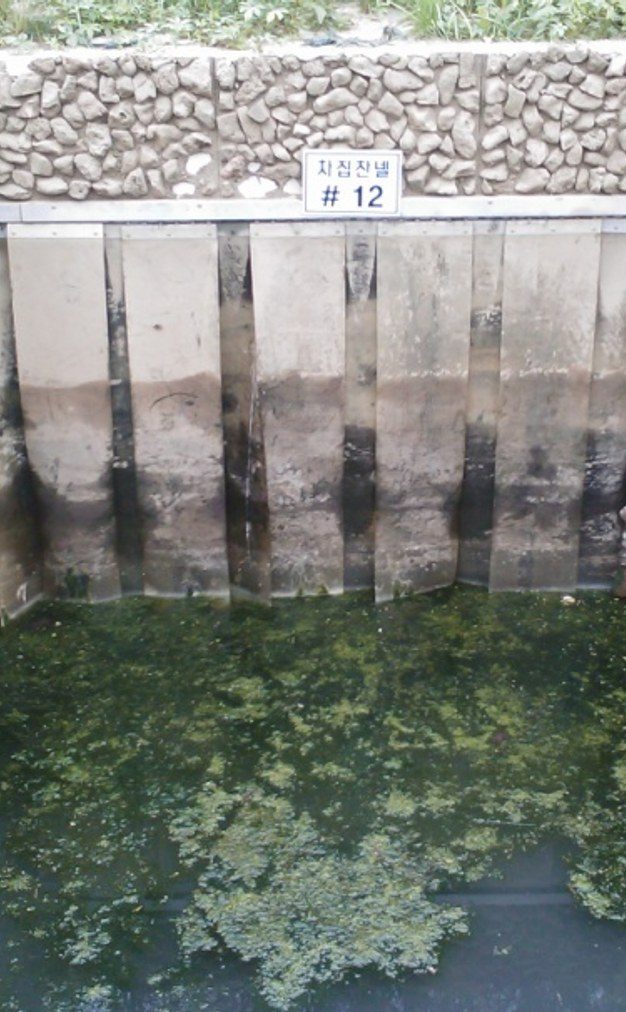
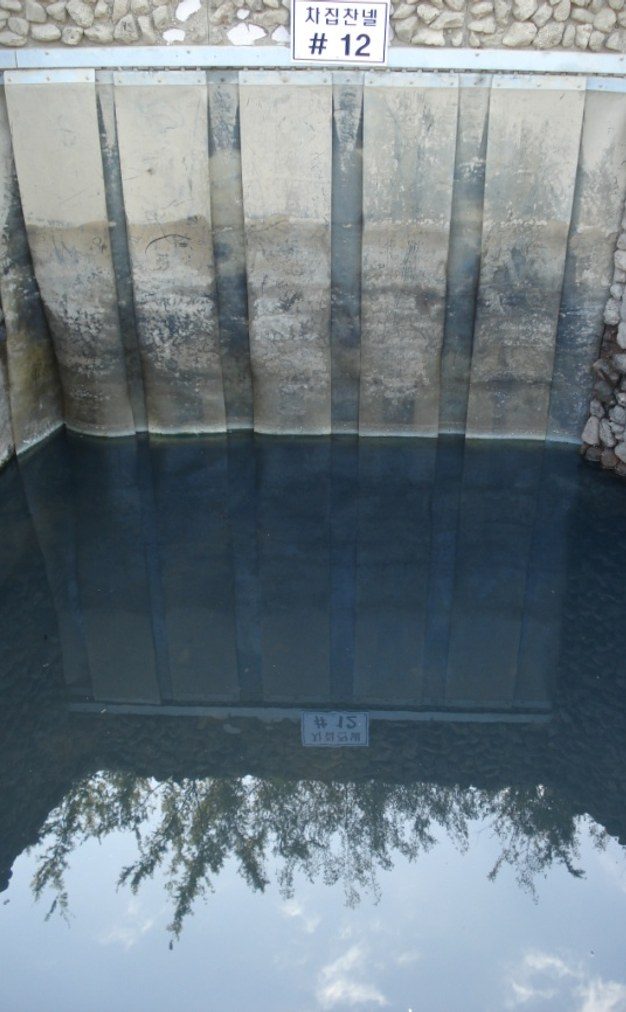
Results from our earlier OHR bio-nanobubble treatment (ozone and microbes); no hydrogen peroxide was used. Analysis: JIS K 0101 ¡¤ 0102, marine observation guidelines.


Strong demand for landscape quality and a clear operator make adoption quick.
Urban water features with frequent algae and odor complaints
Private waters where visitor scenery and hygiene matter
Linked to public and municipal pilot projects